May 27, 2026 • Celeste Morrow • 9 min reading time • Prices verified June 4, 2026
Tanning Waters and Mists: The Lightest-Touch Format for Face and Body, Ranked
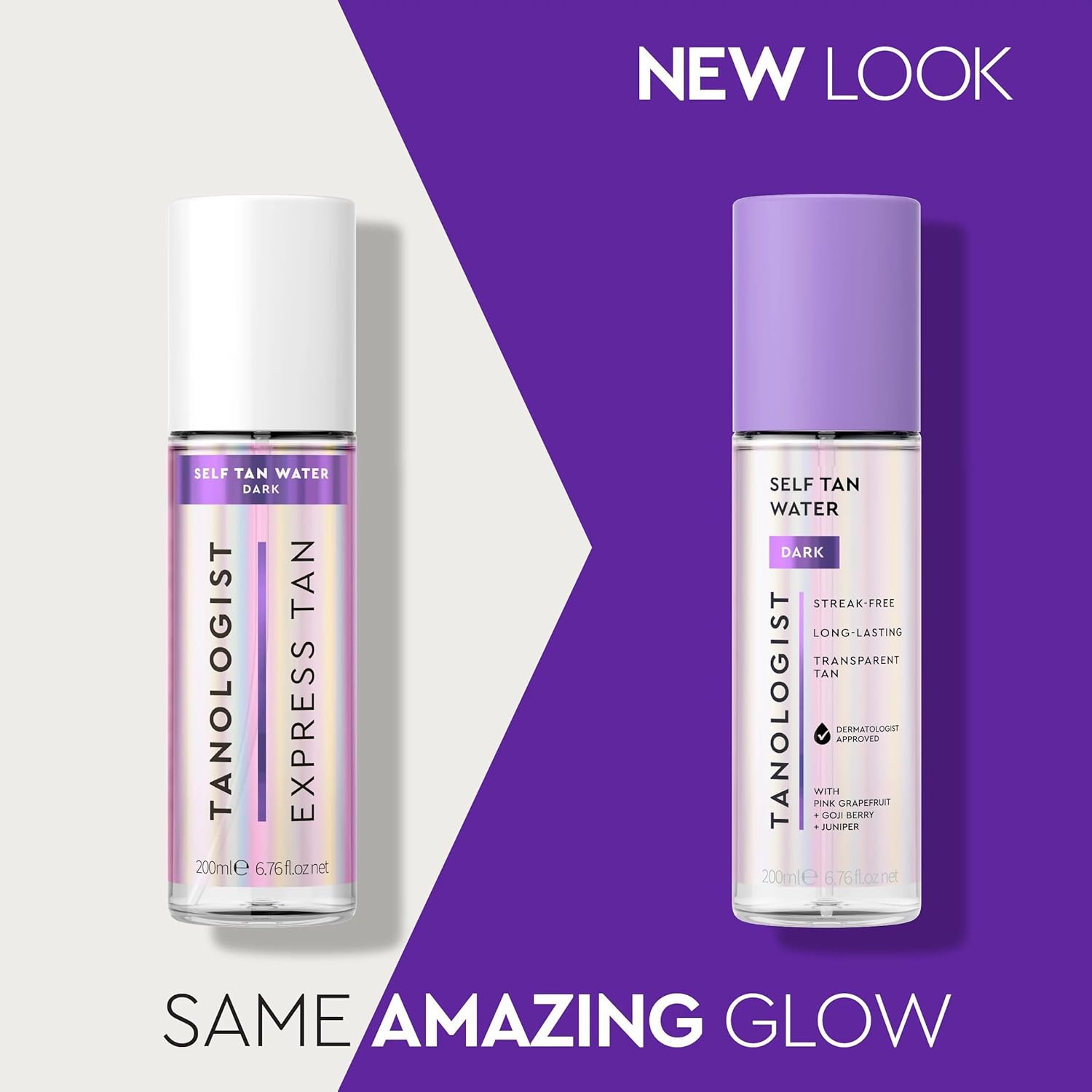
If you’ve ever skipped self-tanner in the summer because you were worried about streaks, patchy elbows, or that tell-tale biscuity smell, the water-and-mist format exists specifically to lower that barrier. A tanning water (sometimes called a facial tanning water or body water) is essentially a lightweight, water-textured product — think closer to a toner or essence than a lotion — that contains DHA (dihydroxyacetone, the active ingredient in virtually every self-tanner that reacts with the top layer of your skin to produce colour). A tanning mist is the same idea delivered through a spray nozzle: fine, even, easy to layer. Both formats carry less DHA per application than a mousse or oil, which is the whole point — you’re trading maximum depth for control, blendability, and a finish that reads as “I spent a long weekend outside” rather than “I just got a spray tan.” This guide breaks down how the format actually works, ranks the strongest options available in 2026, and gives you a clear decision framework so you know exactly when this format is the right call and when you should reach for something stronger.
What Makes the Water-Mist Format Different (and Why It Matters for Face Use)
The key variable in any self-tanner is DHA concentration. Mousses and lotions in the premium tier — Vita Liberata pHenomenal Mousse, St. Tropez Self Tan Classic Mousse — typically run 6–12% DHA depending on the “medium” or “dark” SKU. Waters and mists sit materially lower, usually in the 2–5% range, though brands rarely publish the exact number. That gap has real consequences.
By the numbers:
- Mousse/lotion formats: estimated 6–12% DHA (medium–dark SKUs)
- Tanning waters and mists: estimated 2–5% DHA
- Typical develop time for waters/mists: 4–8 hours (vs. 2–4 hours for express mousses)
- Layers needed for a medium result: 2–3 applications over consecutive days
Lower DHA means a slower, more gradual colour build — which sounds like a limitation but is actually a feature when you’re working on your face or décolletage, where blending errors are visible and skin is more reactive. Healthline’s overview of DHA chemistry notes that the molecule works by reacting with amino acids in the stratum corneum (the outermost, dead-cell layer of skin), meaning the colour develops completely independently of UV exposure and fades as those cells naturally shed. The face turns over faster than the body — roughly every 14–21 days versus 28–40 for the body — which means a heavy mousse application on the face can look patchy within a week as cells shed unevenly. A water formula, layered gradually, tends to fade more evenly for exactly this reason.
Vogue’s round-up of face-specific self-tanners repeatedly flags this logic: lighter DHA concentrations allow for daily micro-adjustments rather than committing to a single heavy application that you’re locked into for days.
Paula’s Choice’s ingredient guide on self-tanners also flags the role of erythrulose — a gentler, slower-developing companion active that many tanning waters use alongside DHA. Erythrulose on its own produces a slightly cooler, less orange-adjacent result, and in combination with DHA it tends to extend the life of the tan and smooth out the colour transition at the hairline and jaw — two zones where waters dramatically outperform thicker formats.
The Ranked Formats: How the Top Tanning Waters and Mists Compare
1. Isle of Paradise Self-Tanning Water (~$30–$35)
The reference product in the category. Isle of Paradise launched the mainstream tanning-water concept and the formula remains the benchmark reviewers at Byrdie and Allure consistently return to when mapping the space. It comes in three colour-correcting variants — green (for redness), blue (for a cool, neutral finish), and purple (for enhancing olive tones) — which is a meaningful differentiator when most competitors offer a single formula. The colour guide in the product means you can see where you’ve applied it before it develops, which directly addresses the number-one complaint in the format: invisible product on skin.
The trade-off: Isle of Paradise Water builds slowly. Reviewers report needing 2–3 applications over 48 hours to hit a result visible in daylight. For face use, that’s a feature. For someone wanting visible body colour before a Saturday event they’re prepping on Thursday, the math gets tight.
2. Tan-Luxe The Water Illuminating Self-Tan Water (~$45–$50)
Tan-Luxe’s water variant extends the brand’s signature illuminating philosophy — the same approach visible in Tan-Luxe The Body Oil — into a lighter delivery system. Reviewers consistently describe the finish as luminous rather than matte, which makes it a strong choice for the décolletage and shoulders where a dry, powdery finish can look ageing. Harper’s Bazaar’s round-up of tanning waters singles out the Tan-Luxe Water for its skincare-forward ingredient deck, which includes hyaluronic acid and a fragrance profile that sits well away from the classic DHA biscuit note most tanners are trying to escape.
Cost-per-application math: at roughly $47 for 200ml, and assuming 3–4ml per full-face application, you’re looking at 50–65 face-only applications. That’s strong value for a premium product that doubles as a hydrating toner step.
The trade-off: the illuminating finish isn’t for everyone. Skin that already trends oily around the T-zone may find the added luminosity reads as excess shine by mid-afternoon.
3. St. Tropez Self Tan Purity Bronzing Water Mist (~$40–$45)
St. Tropez’s entry into the mist sub-format is engineered specifically around the “no-smell” brief. The brand’s marketing claims a 99% natural origin formula and a scent profile described by reviewers as “fresh” rather than the aldehydic, biscuity note characteristic of straight DHA. Allure’s self-tanner coverage notes it as one of the more accessible entry points for self-tan newcomers who’ve been put off by smell in the past, while still sitting firmly in the intermediate performance tier.
The mist nozzle is 360-degree capable, which matters for back application — a notoriously awkward zone in every format. Reviewers consistently flag the even distribution and the lack of streaking at the elbow and knee creases as genuine advantages over lotion formats.
The trade-off: mist formats inherently carry overspray risk. Applying indoors near upholstered surfaces requires care. Reviewers recommend applying in the shower or over a towel on the floor.
4. Bondi Sands Technocolor 1 Hour Express Self Tanning Foam Water (~$22–$28)
This is the format’s budget-accessible option and the natural upgrade path for readers coming from the Bondi Sands Everyday Gradual franchise. The “foam water” texture sits between a traditional foam mousse and a true water — slightly more substantial than Isle of Paradise but significantly lighter than a standard mousse. It develops in 1–3 hours depending on preferred depth, which addresses the “slow build” limitation that characterises most waters.
Reviewers at Byrdie note that the colour payoff per application is the highest in the water-adjacent category, which makes it a reasonable compromise for someone who wants the ease of a water but the result speed of a mousse. The undertone reads slightly warm — not orange, but not the neutral-cool result you get from Isle of Paradise’s blue formula.
The trade-off: the ingredient deck is more conventional — fewer actives, no erythrulose noted in published formulation information — and the formula is less differentiated on the skincare side.
When to Choose This Format (and When Not To)
Here’s the honest decision framework:
Choose a tanning water or mist if:
- You’re applying to your face, neck, or décolletage and want buildable, fade-friendly colour
- You’re new to self-tan or returning after a break and want a forgiving reintroduction
- You prioritise a natural, “been outside” result over dramatic depth
- You want to layer self-tan into an existing skincare routine without disrupting step order (waters sit naturally after serum, before moisturiser)
- Smell is a deal-breaker — this format consistently scores better on odour than mousses
Do not choose a tanning water or mist if:
- You need visible, deep-body colour in under 24 hours — reach for an express mousse
- You have very dry or textured skin that needs the emollients in an oil or lotion to prevent uneven absorption
- You’re targeting specific body areas (shins, knees, feet) where a water formula may develop too lightly to show against dry skin without multiple layers
- You want a dramatic olive-depth finish — per Healthline’s DHA overview, that result requires higher concentrations than waters typically carry
Layering and Technique Notes for the Practitioner
The intermediate-to-enthusiast reader already knows to exfoliate 24 hours before application and to moisturise dry zones (knees, elbows, ankles) lightly before applying. For the water format specifically, there are two technique adjustments worth making:
Apply to damp, not fully dry, skin. Unlike mousses where dry skin is the baseline recommendation, tanning waters behave more predictably when the skin still has a slight surface-water presence — within 30–60 seconds of patting dry after a shower. The water carrier in the formula distributes more evenly before it can settle into dry patches.
Use your palms, not a mitt, for the face. A self-tan mitt is the right tool for body application in any format. But on the face, reviewers consistently report better blending control with clean palms — the warmth and pressure of hands allows for seamless feathering at the hairline, jaw, and brow. Apply in downward strokes from forehead to chin, then blend in circular motions around the nose and temples.
For layering with actives: tanning waters are generally compatible with vitamin C serums applied in the morning after the tan has fully developed overnight. Retinol is the key conflict — both the retinol and the DHA reaction accelerate cell turnover in competing directions. Paula’s Choice’s self-tanner ingredient guide recommends pausing retinol for 48–72 hours around any self-tan application, whether water or mousse format. This is a fixed constraint regardless of format.
The water-and-mist category has matured considerably since Isle of Paradise first made it mainstream. For face-forward tanners, layering-conscious skincare routines, and anyone who wants to build colour gradually without committing to a full-depth mousse, the format is now genuinely competitive — not a compromise. The Isle of Paradise Water remains the most versatile entry if you’re undecided. Tan-Luxe The Water earns the splurge if luminosity and skincare integration are your priorities. And if you want the format’s convenience with faster payoff, the Bondi Sands Foam Water closes the gap. The logic is simple: if your goal is precision over power, this is your format.