April 5, 2026 • Celeste Morrow • 9 min reading time • Prices verified June 4, 2026
How Many Drops, Exactly? A Ratio-by-Ratio Guide to Tan-Luxe, Isle of Paradise, and Tanologist Drops
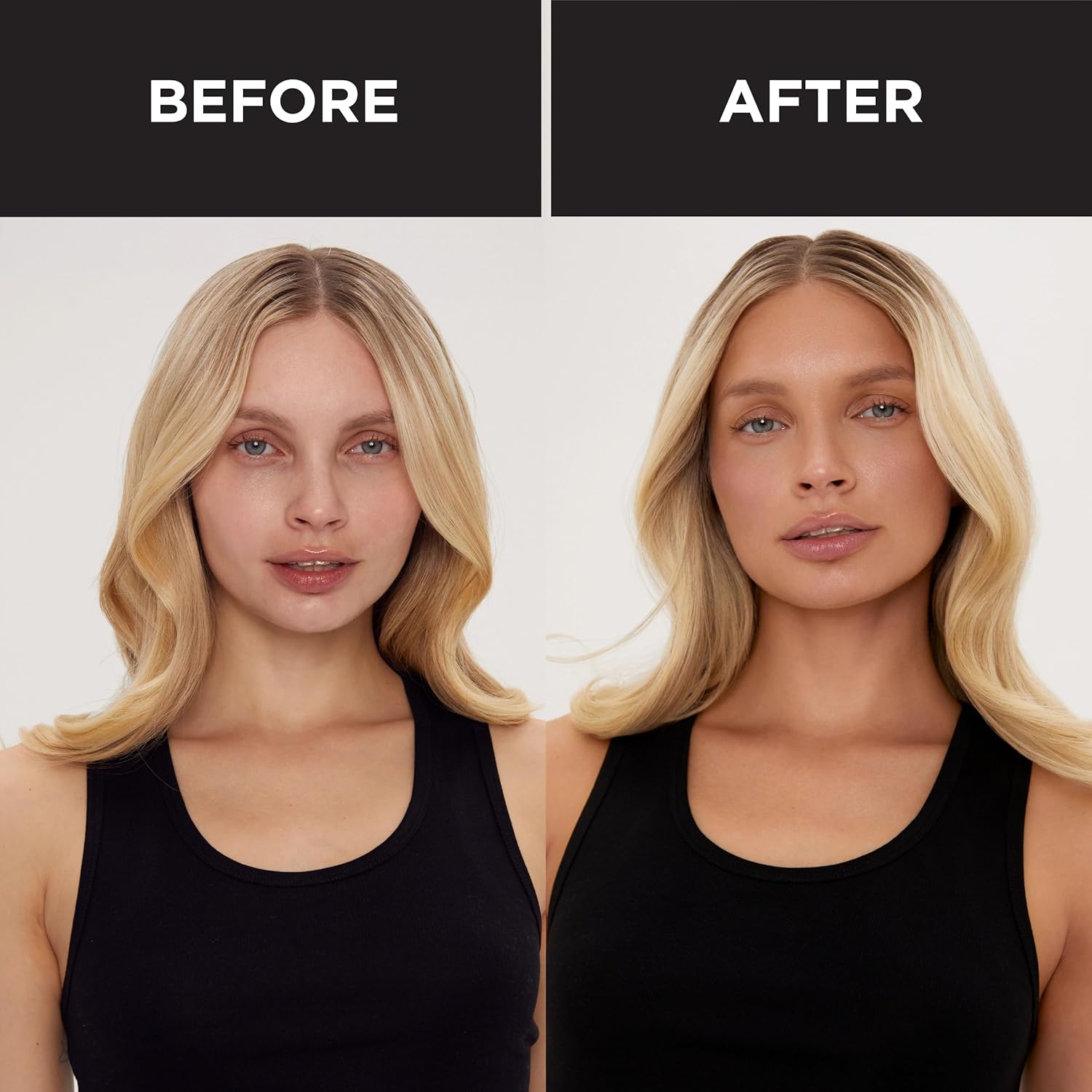
If you’ve ever looked at a bottle of self-tanning drops and thought, but how many do I actually use? — you’re not alone, and the vague “3–6 drops” guidance on most packaging genuinely does not tell the full story. Self-tanning drops are a liquid concentrate containing DHA (dihydroxyacetone, the active ingredient that reacts with the top layer of your skin to create a tan color), and you mix them into your regular moisturizer before applying. The appeal is control: you decide how light or dark you go, drop by drop. But that control only works if you understand that not all drops are equal. Tan-Luxe, Isle of Paradise, and Tanologist each formulate their DHA at different concentrations and in different carrier bases, which means a “3-drop” result looks completely different across all three bottles. This guide breaks down the ratio math for each brand so you can stop guessing and start getting consistent, predictable color.
Why Drop Count Alone Is Meaningless Without Context
Here’s the tradeoff no brand marketing copy fully admits: drop dosing is relative to DHA concentration, carrier viscosity, and the moisturizer you’re mixing into. Add three drops of a high-concentration formula to a thin watery lotion and you get a very different outcome than three drops of a mid-strength formula in a thick, occlusive cream.
Healthline’s overview of DHA notes that most over-the-counter self-tanners contain between 2% and 10% DHA, with higher percentages producing deeper color. The drops category spans nearly that entire range. What this means practically is that a brand advertising “buildable color from 2 drops” may be starting from a 7–8% DHA base, while another brand’s “start with 6 drops” recommendation is calibrated for a 3–4% base. The drop counts are not comparable across brands — they’re each calibrated to their own formula.
The second variable is your moisturizer. A full pump of a rich, high-slip body lotion (roughly 3–5 ml) is the standard carrier most brands design around. If you’re using a gel moisturizer, a lightweight lotion, or — popular in the enthusiast community — a facial serum as the carrier for face drops, you’ll get different color dispersion even at the same drop count. More on the face-specific application further down.
The decision frame: Before you commit to a ratio, you need to know (1) which brand’s concentration tier you’re working with, and (2) what you’re mixing into. Once you have both, the numbers below will hold.
Brand-by-Brand Ratio Breakdown
Tan-Luxe Super Drops and The Face — Higher Concentration, Fewer Drops Required
Tan-Luxe is widely considered the benchmark for high-potency drops. Reviewers at Byrdie consistently rate the Super Drops as one of the strongest-developing formulas in the drops category, and Harper’s Bazaar’s self-tanning drops roundup flags the brand’s fast, deep development as a distinguishing characteristic. The carrier base — a lightweight, non-occlusive serum — disperses evenly in most moisturizers and doesn’t add texture or drag.
Practical ratios for Tan-Luxe Super Drops (body application, per full pump of moisturizer):
| Desired Result | Drop Count | Expected Development |
|---|---|---|
| Light, sun-kissed | 2–3 drops | 4–6 hours, subtle warmth |
| Medium, natural tan | 4–5 drops | 6–8 hours, clear color |
| Deep, buildable | 6–8 drops | 8+ hours, strong color |
Because the concentration is high, the margin for error is tighter. Allure’s self-tanner coverage repeatedly notes that Tan-Luxe users who skip prep — dry or unexfoliated skin, missed knees and elbows — tend to see the deepest uneven patches, precisely because the DHA develops so fully. At 6+ drops, blending speed matters: you have roughly 60 seconds from mixing to applying before the formula starts setting against itself in the palm of your hand.
For The Face (Tan-Luxe’s face-specific drops): The face formula is slightly lower concentration than the Super Drops, designed to develop more gradually on thinner facial skin. Reviewers on aggregated beauty platforms report that 2–3 drops mixed into one pump of a medium-weight moisturizer delivers a natural-looking result in the medium tone range, while 4–5 drops pushes into deeper territory. The serum-weight base layers cleanly under SPF and doesn’t pill, which is a consistent point of praise in Byrdie’s facial self-tanner coverage.
Isle of Paradise Drops — Color-Coded Concentrations, Mid-Range Development
Isle of Paradise made drops accessible to the intermediate-level tanner by coding their three-shade system (Light/Green, Medium/Blue, Dark/Purple) not just by DHA concentration but by undertone-correction pigment. This is a different formulation philosophy than Tan-Luxe’s neutral base. The color-correcting pigments in each shade are cosmetic — they wash off — but they guide placement and give you immediate visual feedback on blending.
Per Isle of Paradise’s published brand specifications and confirmed across Harper’s Bazaar’s review of the line, the three variants correspond roughly to these DHA tiers:
- Light (Green): Lower DHA, warm-correcting, best for Fitzpatrick I–II
- Medium (Blue): Mid DHA, neutral-to-cool correction, suitable for Fitzpatrick II–IV
- Dark (Purple): Higher DHA, red-correction, designed for Fitzpatrick III–V building deep results
Practical ratios for Isle of Paradise (per full pump moisturizer):
Because Isle of Paradise is formulated at a gentler concentration than Tan-Luxe, the brand’s own recommended starting point of 3–6 drops is reliable as a genuine light-to-medium range — it’s not underestimating the way some brands do.
| Shade Variant | Light Result | Medium Result | Deep Result |
|---|---|---|---|
| Light (Green) | 3–4 drops | 5–7 drops | 8–10 drops |
| Medium (Blue) | 3–4 drops | 5–6 drops | 7–9 drops |
| Dark (Purple) | 2–3 drops | 4–5 drops | 6–8 drops |
The Dark variant is meaningfully more concentrated and needs fewer drops than the packaging’s general guidance implies. Across aggregated reviews at Allure and Byrdie, the consistent note is that the Dark drops can push orange on lighter skin tones at high counts — not because the formula is defective, but because very high DHA doses on low-melanin skin read warm before they read bronze. If you’re Fitzpatrick I–II and want a deep result, the Medium variant at a higher drop count tends to give a cleaner finish than the Dark variant at a lower one.
One tradeoff unique to Isle of Paradise: the color-correction pigments make it harder to use this formula with tinted or colored moisturizers. The visual blending guide the pigments provide only works against a neutral or white carrier.
Tanologist Drops — The Budget-Accessible Entry with Honest Mid-Strength Concentration
Tanologist sits at the lower end of the drops price tier (generally $15–$20 depending on retailer), and the formulation reflects that positioning — not in a way that makes it ineffective, but in a way that makes it more forgiving rather than more precise. Healthline’s overview of DHA notes that gentler formulas are better suited to beginners because they allow multiple coats before a correction becomes necessary, and Tanologist’s concentration profile fits that pattern.
The practical result: Tanologist requires more drops to achieve what Tan-Luxe achieves at lower counts, and development time runs slightly longer — expect 8–10 hours for full color at medium-high ratios.
Practical ratios for Tanologist Drops (per full pump moisturizer):
| Desired Result | Drop Count | Notes |
|---|---|---|
| Light | 4–5 drops | Very forgiving, good for first applications |
| Medium | 7–9 drops | The brand’s “sweet spot” per reviewer consensus |
| Deep | 10–12 drops | Takes time; layer next-day rather than pushing single application |
The major tradeoff at Tanologist’s price point is ingredient transparency. The brand does not publish DHA percentage on packaging or product pages, which makes it harder to compare directly to competitors. Byrdie’s self-tanner coverage has noted this gap. For the enthusiast audience who tracks erythrulose ratios and prefers formula transparency, this opacity is a real limitation. For the practitioner who wants a reliable body result without precision chemistry, the forgiving curve is genuinely useful.
Face vs. Body Ratios: Why They’re Not Interchangeable
All three brands package drops that technically can be used on face and body, but the ratios for each are different — and using body-drop ratios on your face is the fastest route to uneven patches and breakouts.
Facial skin is thinner, more pH-variable (especially if you’re using actives), and processes DHA faster in some zones (forehead, nose) and slower in others (around the mouth, jawline). Harper’s Bazaar’s coverage of facial self-tanning notes that most facialists recommend cutting face-drop ratios to roughly 50–60% of what you’d use on the body to account for this.
Simplified face ratio rule: Take your body drop count for your target depth and use 50–60% of that, mixed into a single pump of facial moisturizer. For Tan-Luxe, that means 2–3 drops on the face while running 4–5 on the body for a matching medium result. For Isle of Paradise Medium, 3–4 drops on the face while running 6–7 on the body.
The exception: Tan-Luxe The Face is specifically formulated for facial use at lower concentration and doesn’t require this adjustment — you can follow the label guidance more directly.
The Decision Rules
If you can hold only one framework from this article, make it this:
If you want precision and are comfortable with a tighter margin for error → Tan-Luxe Super Drops, starting at 3–4 drops and building. The high concentration rewards good prep and penalizes skipped exfoliation.
If you want undertone guidance built into the formula and a more forgiving curve → Isle of Paradise at the shade variant matched to your Fitzpatrick type. Use the Medium variant before assuming you need Dark.
If you’re building a routine, learning your skin’s DHA response, or working a lower budget → Tanologist for body, then ladder to Isle of Paradise or Tan-Luxe once you know your depth preference. The lower concentration teaches you what your skin does with DHA before you’re working with a less forgiving formula.
If you’re a Fitzpatrick I–II chasing a deep result: At any brand, multiple lighter applications over consecutive days outperform a single high-drop session. The color reads more natural, develops more evenly, and corrects more easily if something goes wrong. This is the consistent finding across Allure’s and Byrdie’s aggregated tanner guidance — not a workaround, but the actual right technique for fair skin at depth.
Drop counts are a starting point. Your moisturizer weight, skin prep, and application speed are the variables that ultimately determine whether the math on paper matches the color in the mirror.